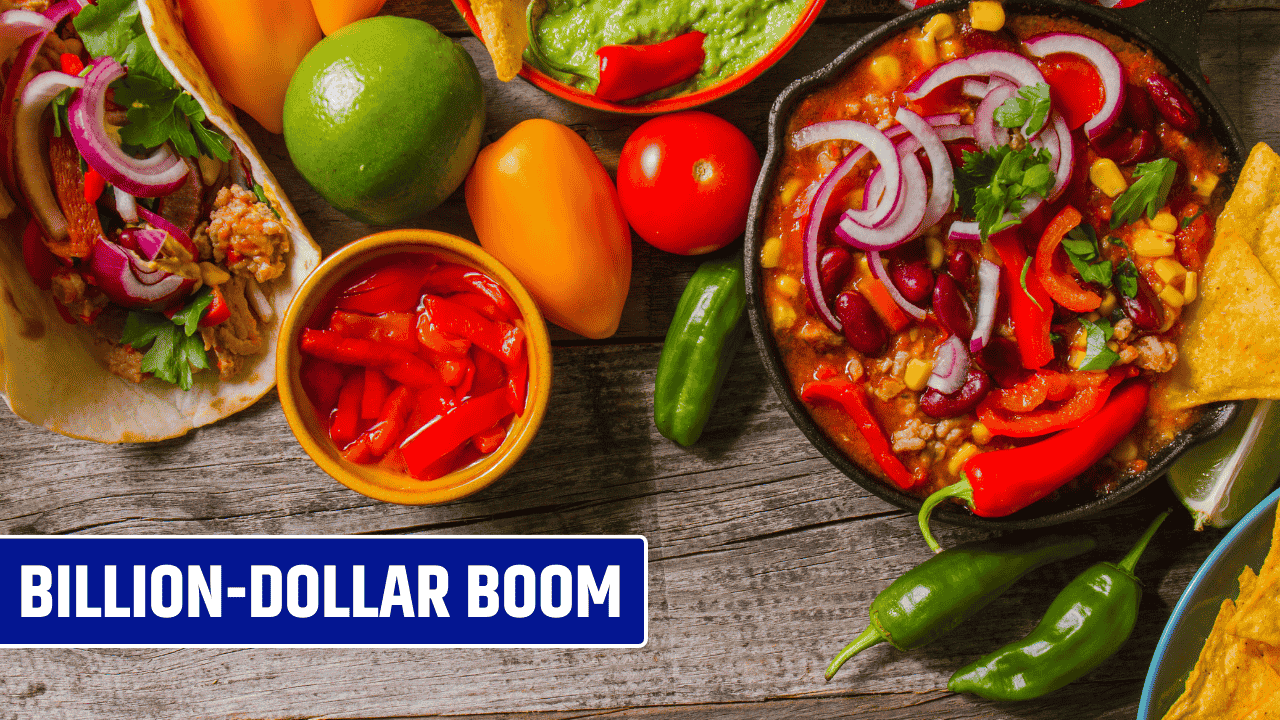
The Mexican food industry in the United States isn’t just popular — it’s become a billion-dollar economic powerhouse. What started as regional Tex-Mex eateries and local taquerias has evolved into a dominant and dynamic segment of the American food landscape, influencing everything from fast casual dining to premium culinary innovation. Today, Mexican food’s growth reflects shifts in consumer tastes, cultural influence, lifestyle dynamics, and business strategy — and it’s only accelerating.
Here’s a clear, data-informed look at how and why this growth is happening.
A Snapshot: Mexican Food’s Economic Footprint

Mexican cuisine has consistently ranked among the top-selling ethnic food categories in the U.S. Its total market value — spanning restaurants, fast-casual chains, food trucks, groceries, and packaged products — reaches into the tens of billions annually, with continued strong growth year-over-year.
Major Mexican-inspired brands like Chipotle, Taco Bell, Qdoba, and regional chains have become household names. But beyond major franchises, thousands of independent establishments and food trucks contribute significantly to employment, small business creation, and local economic activity.
The overall foodservice market growth, changing consumer preferences, and broad cultural adoption have helped Mexican cuisine capture a disproportionate share of the category’s economic expansion.
Why Americans Can’t Get Enough: Consumer Drivers
1. Flavor Meets Convenience

Mexican food offers bold, layered taste profiles that go beyond traditional fast food. The combination of smoky chiles, fresh herbs, citrus acidity, and rich sauces creates complex flavors that appeal widely. At the same time, many Mexican dishes are inherently portable and customizable — perfect for modern dining habits.
2. Healthier Perceptions
Compared with some legacy fast food categories, many Mexican meals are perceived as fresher or more balanced. Grilled proteins, beans, vegetables, salsas, and corn-based tortillas are viewed as lighter and fitter for today’s wellness-oriented diners — even in fast casual formats.
3. Customization and Variety
Tacos, burritos, bowls, and street snacks are highly adaptable. Customers can tailor bases, proteins, toppings, salsas, and sides — a key reason fast casual Mexican eateries have grown rapidly. This flexibility meets diverse dietary preferences, including vegetarian, vegan, keto, and gluten-free options.
4. Cultural Influence

Mexican culture and cuisine are deeply woven into American life. Beyond food, the broader cultural visibility through media, travel, and cross-border communities has increased authenticity and curiosity.
Fast Casual + Mexican = A Winning Formula
A major force behind Mexican food’s economic rise has been its dominance in the fast casual segment — a dining category positioned between traditional fast food and full-service restaurants.
Brands like Chipotle Mexican Grill pioneered this model by offering:
- Transparent ingredient sourcing
- Open kitchens
- Fresh preparation
- Custom orders
- A focus on quality over deep-frying
This concept resonated with millennials, Gen Z, and wider audiences seeking better-for-you options with speed and affordability. As a result, fast casual Mexican chains have consistently posted strong same-store sales growth, rapid unit expansion, and robust investor interest.
Small Businesses and Local Entrepreneurs
While national chains get media attention, tens of thousands of local Mexican restaurants, taquerias, and food trucks drive significant economic value:
- They create jobs in urban and rural areas alike.
- They support local supply chains (produce, meats, spices).
- They foster entrepreneurship and cultural economic participation.
These businesses often serve as cultural hubs — building community and expanding food tourism.
Elevated Mexican Cuisine: A Premium Pivot
Another factor contributing to growth is the culinary elevation of Mexican food. High-end restaurants have reimagined traditional dishes with premium ingredients and creative techniques — from mole sauces to heirloom corn preparations and chef-curated tasting menus.
This expansion into upscale dining opens Mexican cuisine to new customer segments with higher average checks, greater media exposure, and broader culinary respect — all boosting the industry’s economic scope.
Market Trends Fueling Growth
• Younger, Diverse Consumer Base
Younger generations tend to favor experiential and global cuisines, driving curiosity and experiment-oriented dining choices.
• Convenience and Delivery
Mexican food performs well in off-premise dining — carryout and delivery platforms — because burritos, tacos, and bowls travel well and are readily reordered.
• Retail Cross-Over
Beyond restaurants, Mexican food is thriving in grocery aisles:
- Salsa and hot sauce sales
- Packaged tortillas and chips
- Meal kits reflecting Mexican flavors
- Refrigerated Mexican entrees
These retail products expand reach and reinforce cuisine familiarity at home.
Challenges — But Continued Opportunity
Despite strong growth, the Mexican food industry faces headwinds:
- Ingredient cost inflation can squeeze margins.
- Skilled labor shortages affect service and quality.
- Authenticity debates (ensuring respect for cultural origins) influence brand perception.
- Competition from other global cuisines.
Still, Mexican restaurants that balance authenticity, quality, innovation, and service are well-positioned for long-term success.
What the Future Holds
Here’s what industry experts and food analysts expect:
Continued expansion of Mexican-inspired fast casual brands
Greater focus on regional specialties (beyond tacos and burritos)
Growth in premium and experiential Mexican dining
More fusion and cross-cultural culinary innovation
Expansion into health-defined categories (plant-forward, low-carb, etc.)
FAQs
Why is Mexican food more popular than other ethnic cuisines?
It balances bold flavors, adaptability, cultural resonance, and convenience — making it both everyday and special occasion worthy.
How big is the Mexican food market in the U.S.?
It’s a multi-billion-dollar segment spanning restaurants, retail products, and food services, with strong annual growth.
Are tacos and burritos driving most of the revenue?
They are major contributors, especially in fast casual, but the growth includes street food, specialty regional cuisines, and premium dining.
Do Mexican food trends vary regionally in the U.S.?
Yes — coastal and urban markets often show premium and experimental trends, while suburban and rural areas reflect fast casual and traditional offerings.
Will Mexican cuisine continue to grow?
All indicators point to yes — as long as innovation and cultural authenticity remain central.