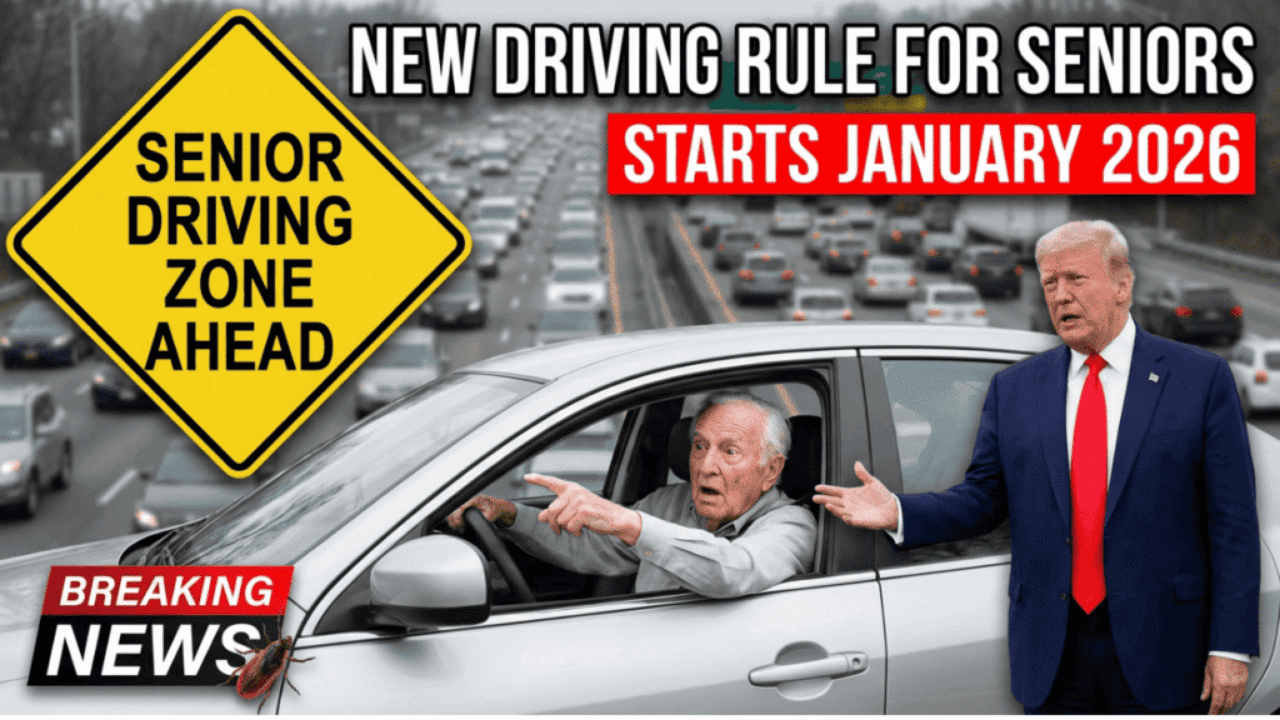
The frustration is real—and frankly, it’s not misplaced. While the spotlight has been on America’s new driving law for seniors, a growing number of drivers (and traffic safety advocates) are asking: what about everyone else? Because if you’ve been out on the highway lately, you’ve seen it—the weaving between lanes, the red-light runners, the tailgaters who think they’re auditioning for Fast & Furious 15.
It’s not just perception. Data backs it up. According to the National Highway Traffic Safety Administration (NHTSA), drivers under 30 account for a disproportionate share of speeding-related fatalities every year. In 2024 alone, nearly 30% of fatal crashes involved a driver under 25. Yet, while seniors are now required to undergo vision and reflex tests, younger drivers—many of whom text, speed, or drive under the influence—often escape additional scrutiny after their initial license exam.

Let’s be honest: seniors might forget a turn signal, but they rarely race through a yellow light at 70 mph.
The New Senior Driving Law: What’s Actually Changing
By January 2026, the U.S. Department of Transportation (DOT) began enforcing its new framework for drivers aged 70 and above. This law doesn’t revoke licenses—it reinforces them with safety checks. Seniors now go through periodic vision tests, reaction-time screenings, and sometimes refresher driving courses.
It’s preventive maintenance—testing the driver, not punishing the person. The idea is simple: ensure older Americans stay safe and independent, while reducing avoidable accidents linked to age-related decline.

Here’s a snapshot of what’s in place now:
| Requirement | Applies To | Frequency | Notes |
|---|---|---|---|
| Vision Exam | 70+ | Every 2 years | Telehealth allowed in some states |
| Reaction-Time Test | 75+ | Every 3 years | Must be in-person |
| Refresher Course | 80+ or after accident | As needed | Online or classroom-based |
| Restricted License Options | All ages | Case by case | For example, daylight-only or local-area permits |
Some states, like Florida and California, are even piloting smartphone-based reaction-time tests, so seniors don’t need to drive hours to a DMV.
The Other Side of the Road: Young Drivers and Reckless Habits
The irony? Most serious highway crashes don’t involve seniors—they involve younger drivers. According to CDC data, motor vehicle crashes are the second leading cause of death for people aged 16–24. Distracted driving, alcohol, speeding, and overconfidence top the list of causes.

And yet, after a person gets their full driver’s license at 18, there’s usually no required retesting—ever.
That’s 60 years of potential bad habits, unchecked.
“I see 19-year-olds blowing past school zones like it’s the Indy 500,” says Officer Ryan Callum, a state trooper in Georgia. “They’re the ones I’m pulling over daily, not seniors going 5 under in the right lane.”
It’s a sentiment shared by many traffic officials who argue that stricter testing should apply across all age groups, not just seniors. After all, maturity doesn’t necessarily come with a birth certificate.
Could Younger Drivers Face Stricter Rules Next?
There’s growing discussion within transportation circles about expanding mandatory assessments to all drivers every decade—not just seniors. Some lawmakers have floated the idea of “universal re-certification” for drivers every 10 years, including short online refreshers or hazard perception tests.
States like Oregon and Washington have even begun pilot programs where repeat traffic offenders must undergo mandatory driving education before license renewal.
Insurance companies are paying attention too. A spokesperson from State Farm noted that “drivers under 25 are statistically our highest-risk group, but seniors get most of the safety-focused policy attention.”
If the DOT’s senior program shows measurable results—say, a decline in crashes involving older drivers—it could pave the way for similar policies for younger age brackets. In other words, today’s 25-year-old might be the next to line up for a digital reaction test in 2030.
Cultural Attitudes: Respect, Responsibility, and the Road
One key difference between seniors and younger drivers? Respect for the rules. Seniors grew up in an era when driving was seen as a privilege, not a right. Many remember when driver’s education was part of high school and seatbelts were just becoming mandatory.
Compare that to today’s driving culture—where social media challenges, in-car selfies, and constant distractions make the road feel like a stage.
“Seniors tend to drive slower and obey laws because they understand consequences,” says Dr. Lydia Zhang, a behavioral psychologist at the University of Michigan. “Younger drivers often overestimate their control and underestimate their risk.”
The generational contrast couldn’t be clearer: one drives cautiously; the other, confidently—sometimes too confidently.
Balancing Independence and Safety
No one’s suggesting seniors are perfect drivers, but the new law recognizes something society often forgets: driving is tied to dignity. Taking away the keys can feel like losing freedom, routine, and self-worth.
The framework’s goal is to let seniors keep that freedom—with guardrails.
But as America’s roads grow busier and more unpredictable, safety can’t just be age-based. From teenagers in Teslas to retirees in Buicks, the road demands accountability from everyone behind the wheel.
Perhaps the next step isn’t more laws for one group—but smarter ones for all.
FAQs
Why was the new law for seniors introduced?
To reduce crash risks by identifying medical or cognitive issues early, while preserving senior independence.
How often do seniors need to retake driving tests?
Typically every 2–3 years, depending on age and state rules.
Can seniors appeal a failed test?
Yes. They can appeal through their state’s DMV review process or request a restricted license.
Are there plans to test younger drivers more frequently?
Not yet, but multiple states are studying the idea of periodic re-certification for all drivers.
What alternatives exist for seniors who can’t drive anymore?
Ride-sharing programs, local senior shuttles, and public transit discounts are expanding in most urban areas.